The Many Worlds of Juno Wilde
By Juno Wilde · yesterday
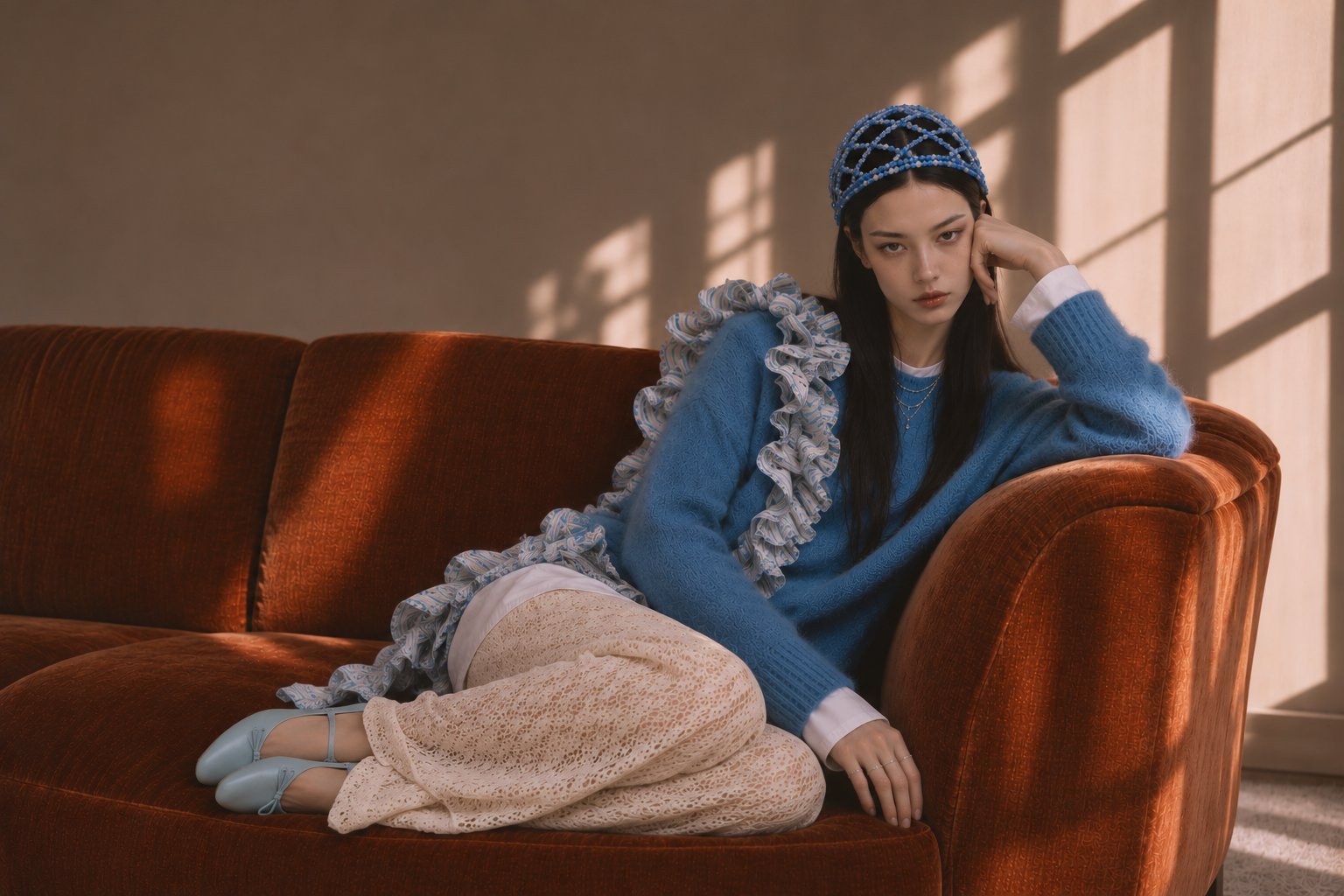
Juno Wilde has always seemed like someone who prefers to keep the world at a distance.
There's the unmistakable presence, the cool, almost inscrutable expression familiar from album covers, billboards and fashion editorials. In person, however, she's considerably less intimidating. She's quick to laugh, occasionally interrupts herself and seems mildly embarrassed by the idea that anyone might find her particularly mysterious.
“I think people have decided I'm a very serious person,” she says. “I'm really not. I just have a serious face.”
To be fair, Wilde hasn't done much to discourage the impression.
Over the course of her career, the singer has constructed an extraordinary collection of imaginary worlds. There have been elaborate feasts, distorted memories, porcelain birds and bodies transformed into sculptural objects. Her music moves comfortably between the beautiful and the grotesque, frequently occupying both at once.
It's earned her a reputation as one of the more unpredictable artists working in experimental pop. Just when listeners think they've figured out what she's doing, she tends to disappear into something else entirely.
Her latest single, “Colour Theory,” continues that tradition, although this time the transformation is particularly vivid.
Gone are the delicate, almost funereal colours of Bone China Aviary. In their place: saturated reds, electric blues, violent pinks and strange optical distortions.
Wilde seems pleased by the contrast.
“I've always liked things that are a bit too much,” she says. “I think I've just become more obvious about it.”
Wilde is not particularly nostalgic about her own work.
She speaks fondly of Bone China Aviary, but doesn't seem inclined to revisit its elaborate visual universe. That isn't because she's disowned it. She's simply finished with it.
“I don't really understand wanting to do the same thing again,” she says. “You've already done it. It's there. You can listen to it.”
This makes a certain amount of sense when you consider the distance between her releases. The theatrical excess of The Feast bears little resemblance to the fractured intimacy of False Memory. Even within a single project, Wilde has demonstrated a willingness to turn familiar ideas inside out.
Still, the new material feels different.
For one thing, she's been listening to music she might previously have dismissed as too obvious, too excessive or simply too much fun.
“I went through this period of listening to really terrible dance music,” she says, before immediately correcting herself. “Not terrible. Some of it was quite good. Some of it was definitely terrible.”
She laughs.
“I think I used to be slightly embarrassed by how much I enjoyed certain things.”
What changed?
“I stopped being embarrassed.”
It's a remarkably simple answer from an artist whose work routinely inspires lengthy interpretations online.
Wilde knows about the theories. She's read some of them.
“Some people are very clever,” she says. “They'll notice something I did intentionally, and then they'll notice seven other things I had absolutely nothing to do with.”
Does she ever feel tempted to explain?
“No. I like the seven other things.”
There is a tendency to describe Wilde's career through its visual transformations, as though each new wardrobe and colour palette represents a corresponding change in personality.
She doesn't particularly agree with that assessment.
“I think I'm probably quite consistent,” she says. “It's just the things around me that change.”
She's more forthcoming when discussing the actual process of making music, particularly the frustrating period between having an idea and figuring out what to do with it.
She'll sometimes spend days working on something that ultimately gets discarded. Other songs arrive almost fully formed. She has no particular loyalty to either method.
“People always want you to say the difficult ones are better,” she says. “Sometimes the easy ones are better. It's very annoying.”
She also admits to being an obsessive reviser, although she's learning to recognise when a song has had enough attention.
“At a certain point you're not improving it anymore. You're just moving things around because you can.”
It's an interesting admission from someone whose work can appear so meticulously constructed.
When I ask whether she's ever finished a song and immediately hated it, she doesn't hesitate.
“Oh, absolutely.”
And what happens to those songs?
“Nothing. They sit there and embarrass me privately.”
For all her extraordinary visual ambition, Wilde is surprisingly uninterested in the machinery of celebrity.
She understands that an artist is expected to maintain a public persona, but seems reluctant to let hers become too elaborate.
She doesn't describe herself as an enigma or a provocateur. She doesn't speak in grand declarations about challenging the boundaries of art. Asked what she does when she isn't working, she offers a few perfectly ordinary activities before looking almost apologetic.
“Sorry. That's not a very interesting answer.”
Maybe not. But it is refreshing.
There are moments when the woman sitting across from me seems entirely aware of the distance between herself and the Juno Wilde imagined by her audience. More importantly, she seems comfortable with it.
“I think it's nice that people have their own version of me,” she says. “I just hope they don't expect me to actually be that person.”
The conversation eventually returns to “Colour Theory” and the music she's been recording.
She confirms that a larger project is on the way but remains careful about describing it. There are things she hasn't finished, decisions she hasn't made and ideas she'd rather keep to herself for now.
What she can promise is that it won't sound quite like anything she's released before.
Then she considers that statement.
“Actually, that's probably a terrible promise. I'm sure there's something that sounds like something else.”
She laughs.
“Let's just say I'm enjoying making it.”
It's tempting to interpret all this as the beginning of a brighter, more carefree period in Wilde's career. But brightness, in her world, has never necessarily meant happiness. And experimentation is hardly a new development.
Perhaps the more interesting question is whether she feels differently about making music now than she did at the beginning.
She thinks for a moment.
“I think I'm less worried about whether something is a good idea.”
And is that dangerous?
“Probably.”
Another pause.
“But that's never really stopped me.”