The Nightcaps on Pleasure Gardens, Creative Freedom and Finding Their Way Forward
By The Nightcaps · yesterday About ‘Pleasure Gardens’, their album
Four days before the release of their third studio album, The Nightcaps discuss their changing sound, the freedom of experimentation and why they're becoming less concerned with expectations.
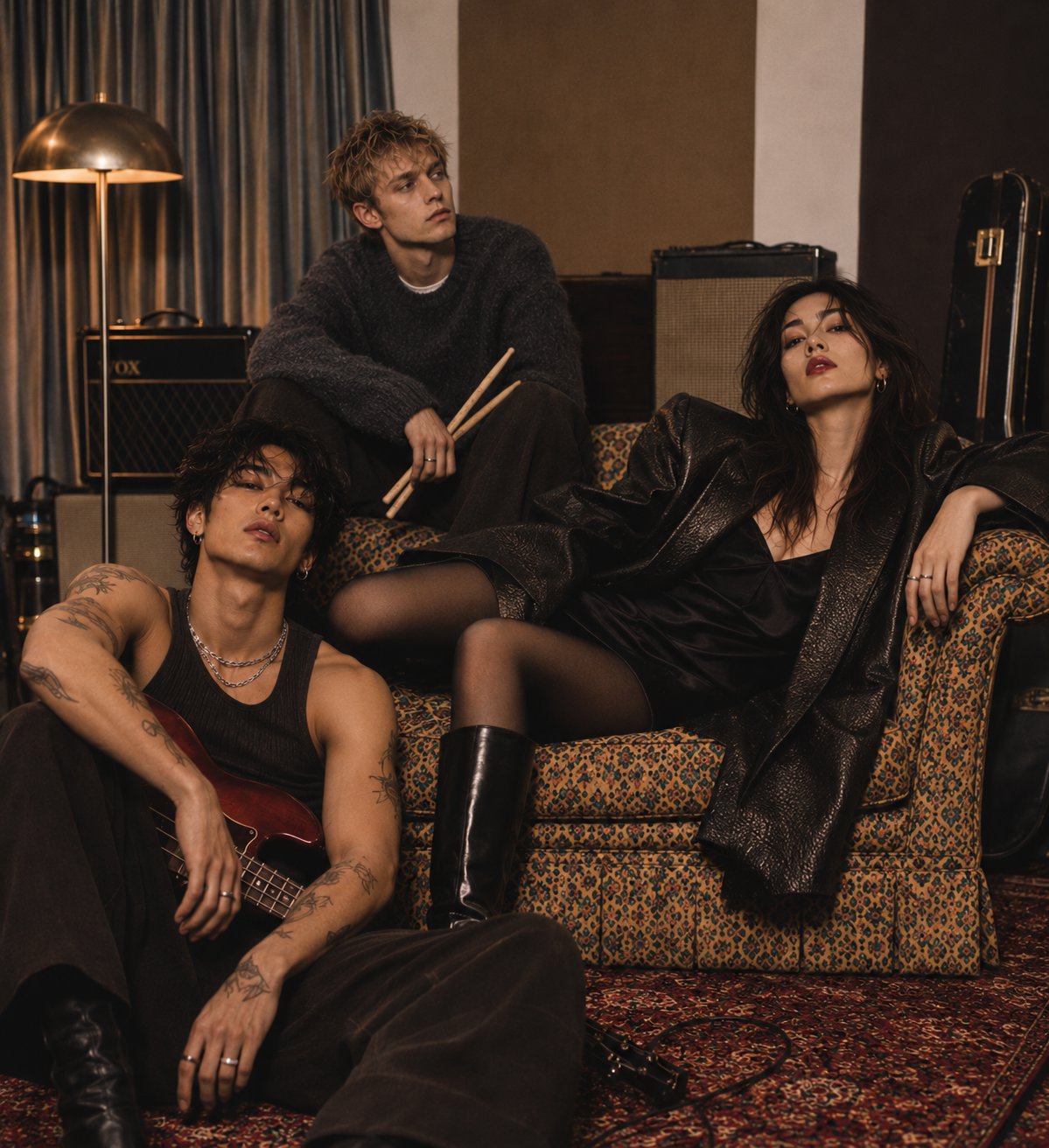
Your third album, Pleasure Gardens, arrives in four days. How are you feeling about the release?
Cleo: Good. We've been living with it for a while, so I'm looking forward to people hearing it. There's always a point where you stop knowing whether something is good because you've listened to it too many times.
How does Pleasure Gardens differ from your previous records?
Cleo: It's probably the most varied thing we've done. Satin & Smoke had quite a specific atmosphere, whereas this one moves around a lot more. We didn't feel particularly obligated to make everything fit together sonically.
Jude: There's more room for experimentation. Some songs are quite immediate, others are much less conventional.
Felix: It's also more fun. I think people might be surprised by that.
Was Human Behaviour always intended to introduce this new direction?
Felix: Yeah. We started writing a lot more around bass-lines rather than traditional guitar progressions. Sometimes a song would begin with something really simple and we'd just see how far we could take it.
Jude: We've become more interested in repetition as well. Finding small changes within something that stays relatively constant.
Cleo: And knowing when to leave things alone. We used to have a habit of adding too much.
What inspired the title Pleasure Gardens?
Cleo: I liked the contradiction of it. Something designed to be beautiful and enjoyable, but also quite artificial. There's an element of control to it that I find interesting.
Does that idea run throughout the album?
Cleo: In some ways, yes. There are songs about appearances, desire, relationships, the things people convince themselves they need. But I don't think every song has to relate directly to the title.
You've described the album as playful, but there's also something unsettling about tracks like The Observation Room.
Jude: We like that contrast. A song can have a groove that feels quite enjoyable while everything else is doing something a little uncomfortable.
Felix: That's probably one of my favourite things about the record. Some of the darker songs are actually the most enjoyable to play.
What was the starting point for The Observation Room?
Cleo: The way people behave when they're aware of being watched. Or when they think nobody's watching. I find both quite interesting.
You've developed a fairly distinctive sound over three albums. Do you feel any pressure to maintain it?
Cleo: Not really. I think we'd get bored very quickly if we started worrying about what we're supposed to sound like.
Jude: There are things that naturally carry through because of how we play together. We don't have to consciously preserve them.
What are you most looking forward to once the album is released?
Felix: Playing the songs live. Some of them are going to be really interesting to work out onstage.
Jude: There are a couple we haven't quite figured out how we're going to perform yet.
And beyond Pleasure Gardens? Have you started thinking about another record?
Cleo: We've been making some things, but it's very early. We haven't decided what it is.
Felix: We're enjoying not knowing.
Finally, what would you like listeners to take away from Pleasure Gardens?
Cleo: Whatever they want, really. I hope they enjoy it. I don't think there's a particular way they're supposed to understand the record.