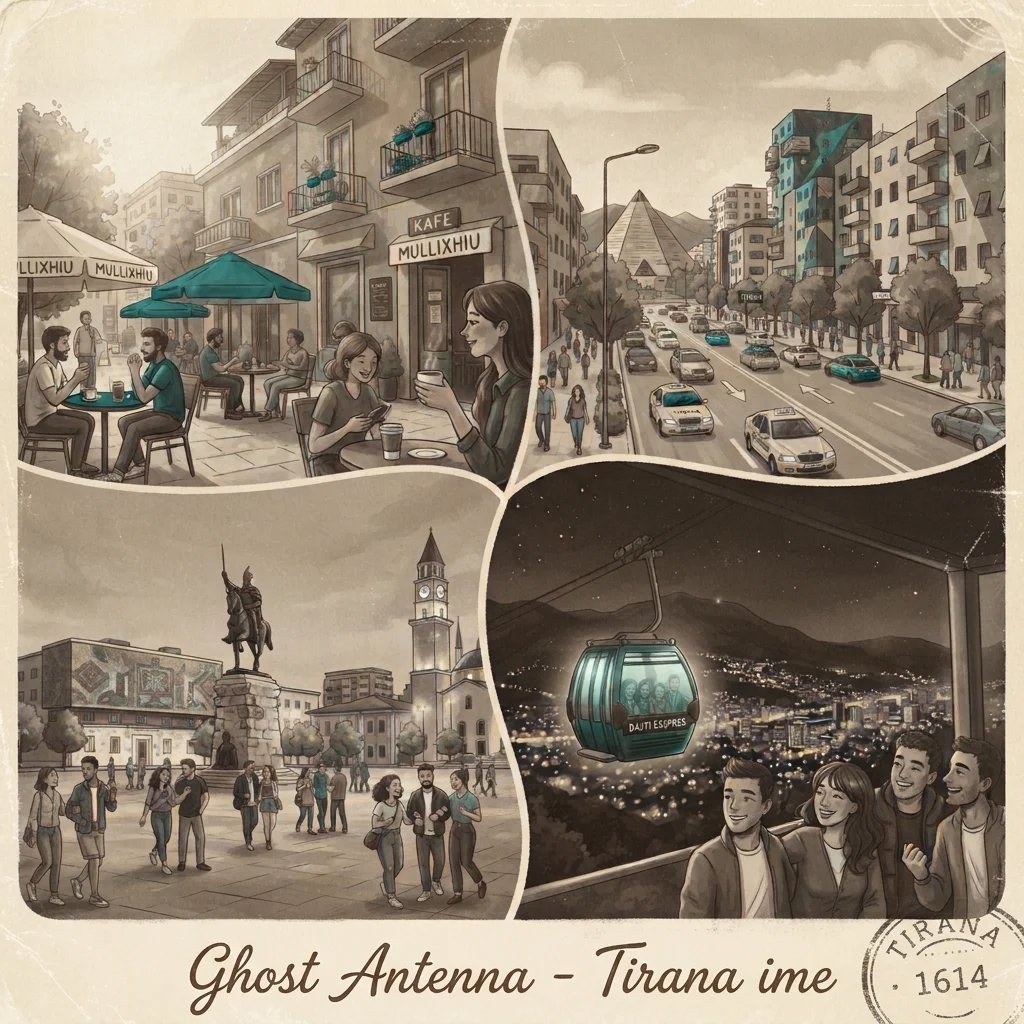
Edhe një këngë për Tiranën, po, e di.
By Ghost Antenna ★ · 2 hours ago · edited About ‘Tirana ime’, their single
Ghost Antenna are back! After the label failed to renew the contract despite some major successes, the band considered giving up music altogether. Now, for the first time, they are releasing their music without a label and in Albanian.
The rule
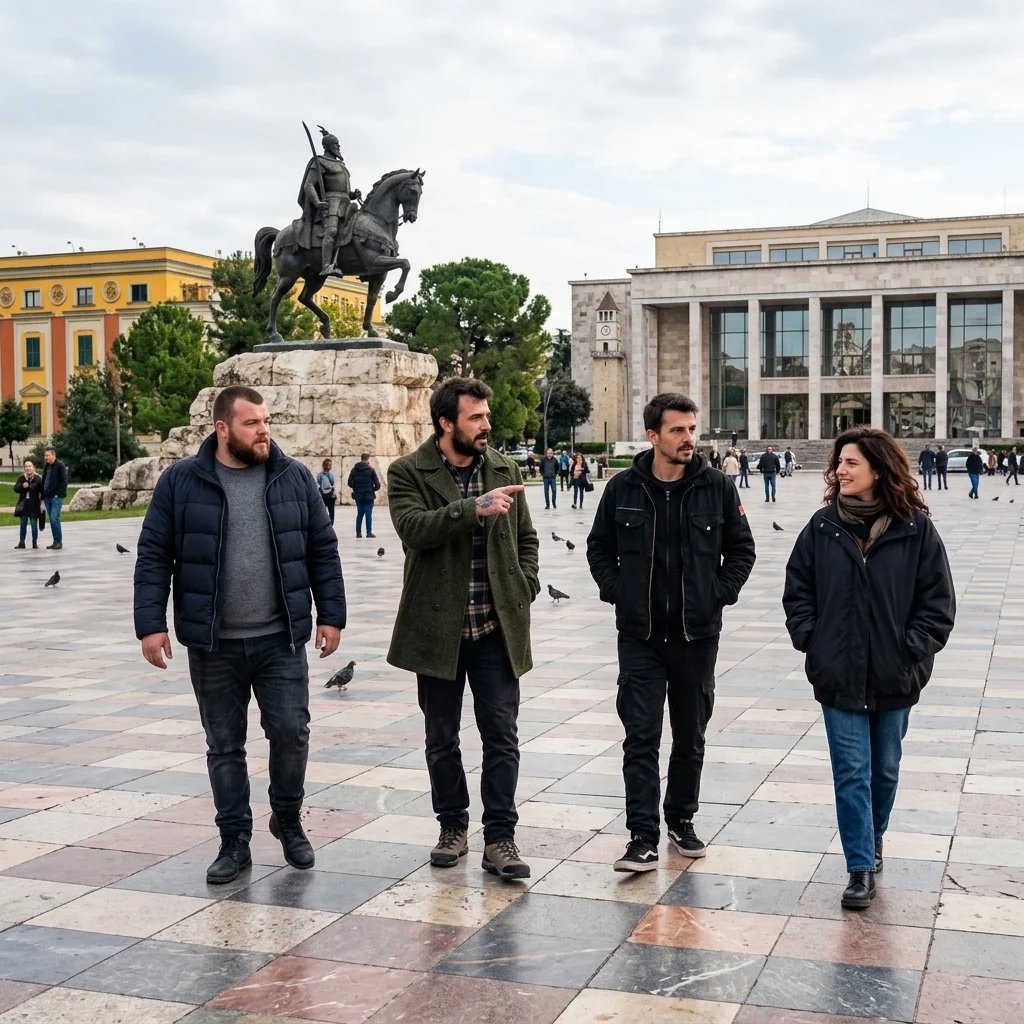
The band had exactly one rule, written in marker on the wall of their rehearsal room: No songs about Tirana.
The rule was Blerim’s idea. He was the singer, and he was the most tired of the clichés. Every Albanian band, he said, eventually writes the same song: coffee in Blloku, Dajti in the distance, colorful buildings, a little tear for the old days. “We are better than that,” he would say, and then order another macchiato at the same café, at the same table, where he had been sitting since he was nineteen.
The winter Ardit came back
Blerim had spent three years in Berlin. He had gone for work and a girl, and he came back in November with one suitcase and the specific silence of someone who has spent too long speaking his second language.
The first week, he complained about everything. The traffic. The potholes. The cranes, which were somehow more numerous than when he left. A taxi driver argued with him about football for twenty minutes and he nearly cried with happiness, then spent the rest of the day annoyed that he had.
Then one evening he walked to Liqeni, the Grand Park, alone, with headphones in and nothing playing. His father used to take him there on Sundays, when Ardit was small, the two of them walking the same loop around the lake while his father talked about nothing. His father had since moved to a smaller flat on the other side of the city and rarely walked anywhere. Blerim stood by the water for a long time, and realized the park was exactly the same, and that he was the one who had changed.
The bad first draft
That night he couldn’t sleep. Around three in the morning, with the sound of a distant horn coming through the window, he picked up the guitar and a notebook and tried to write about what he felt.
It came out terrible. Coffee. Mount Dajti. Colorful buildings. A line about the Tirana sun that he crossed out so hard the pen went through the page.
He was furious, and then, around four, he started laughing. Because the draft was exactly the song he had sworn never to write, and he was writing it anyway, at three in the morning, in his childhood bedroom, in tears. So he did the only honest thing he could think of. He started the song by admitting it.
Edhe një këngë për Tiranën, po, e di.
Another song about Tirana, yes, I know.
The rehearsal
He brought it to the basement the next day, a little embarrassed. Dren, the bassist, listened to the first verse and said nothing. Luljeta, the drummer, who had been quietly keeping the band together for six years, put down her sticks.
“You’re breaking the rule,” she said.
“I know.”
“Don’t you dare fix it,” said Genc. “Keep the cranes. Keep the potholes. Keep all of it.”
They played it through four times that night. Drilon came down at ten to tell them to stop, listened to the chorus from the stairs, and went back up without a word. The next morning, someone had written beneath the old marker line on the wall, in a different pen: No songs about Tirana, except this one.
What the song is really about
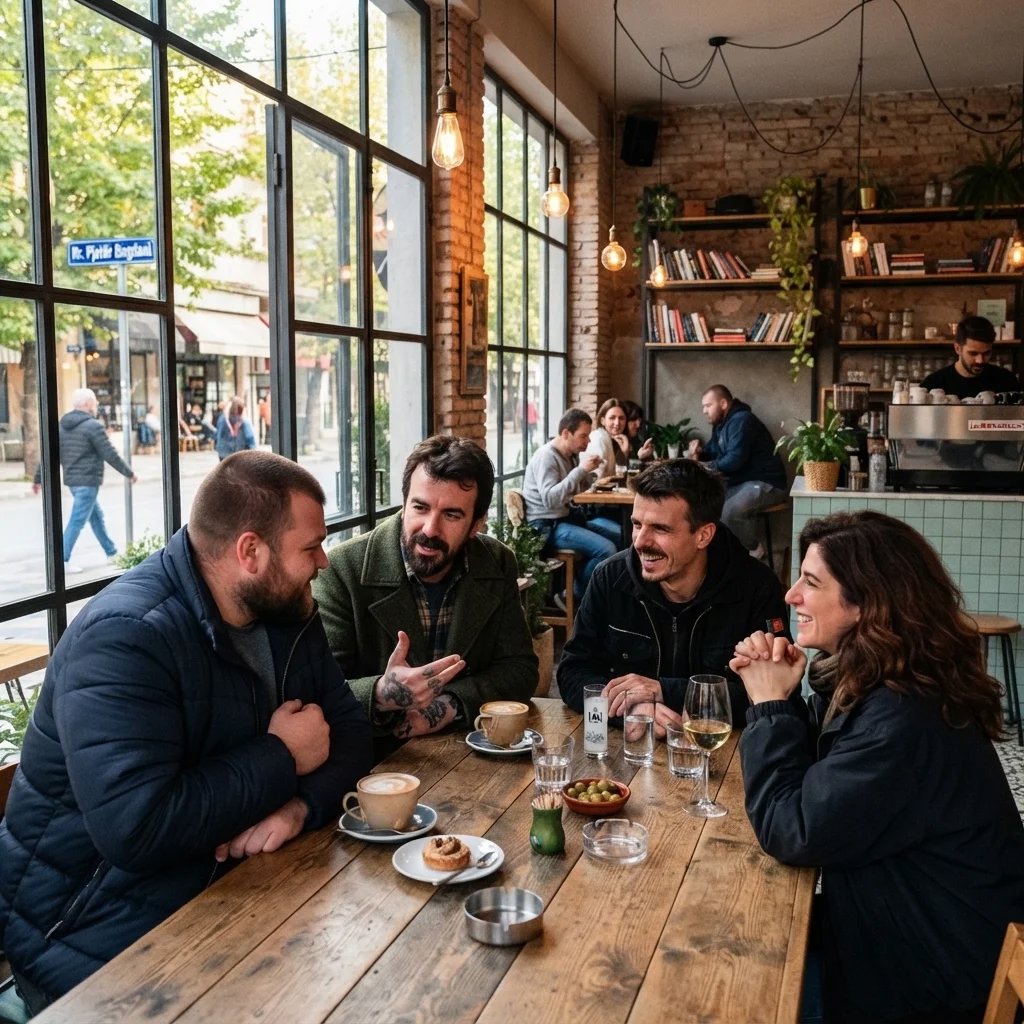
It took them a long time to say it out loud, but the song was never really about Tirana. It was about the way you can love a place and be exhausted by it at the same time, the way you can complain about something precisely because it is yours. It was about fathers and lakes and the strange feeling of returning to a city that kept changing while you were gone, and finding that the thing that had not changed was your own habit of looking for the old faces in the new crowds.
It was about how nostalgia is sometimes just love with nowhere to go.
When they recorded it, Luljeta insisted on leaving in the traffic noise at the start and end, recorded from the basement window. “If we’re going to be sentimental,” she said, “we should at least be accurate.”
The last line
The ending was the last thing Blerim wrote. He had tried a dozen big, dramatic closing lines and hated all of them. In the end he kept the smallest one, the one that arrived at three in the morning, half a joke and half a confession:
Tirana s’ndryshon. Ose po, ndryshon. Po unë jo.
Tirana doesn’t change. Or it does. But I don’t.
He knew it wasn’t quite true, of course. But sometimes a song gets to say the thing you wish were true, and that is enough.
Epilogue
The first time they played it live, in a small bar not far from the old Pyramid, half the room sang along to the chorus by the second time around. Afterward, an older man came up to Blerim and said, “I’ve been complaining about this city for forty years. Thank you for putting it in a song.”
Blerim called his father that night and asked if he wanted to walk around the lake on Sunday.
His father said yes.