TIDESET - LIGHT UP THE DARK - ALBUM REVIEW
By TIDESET ★ · 49 minutes ago About ‘Light Up the Dark’, their album
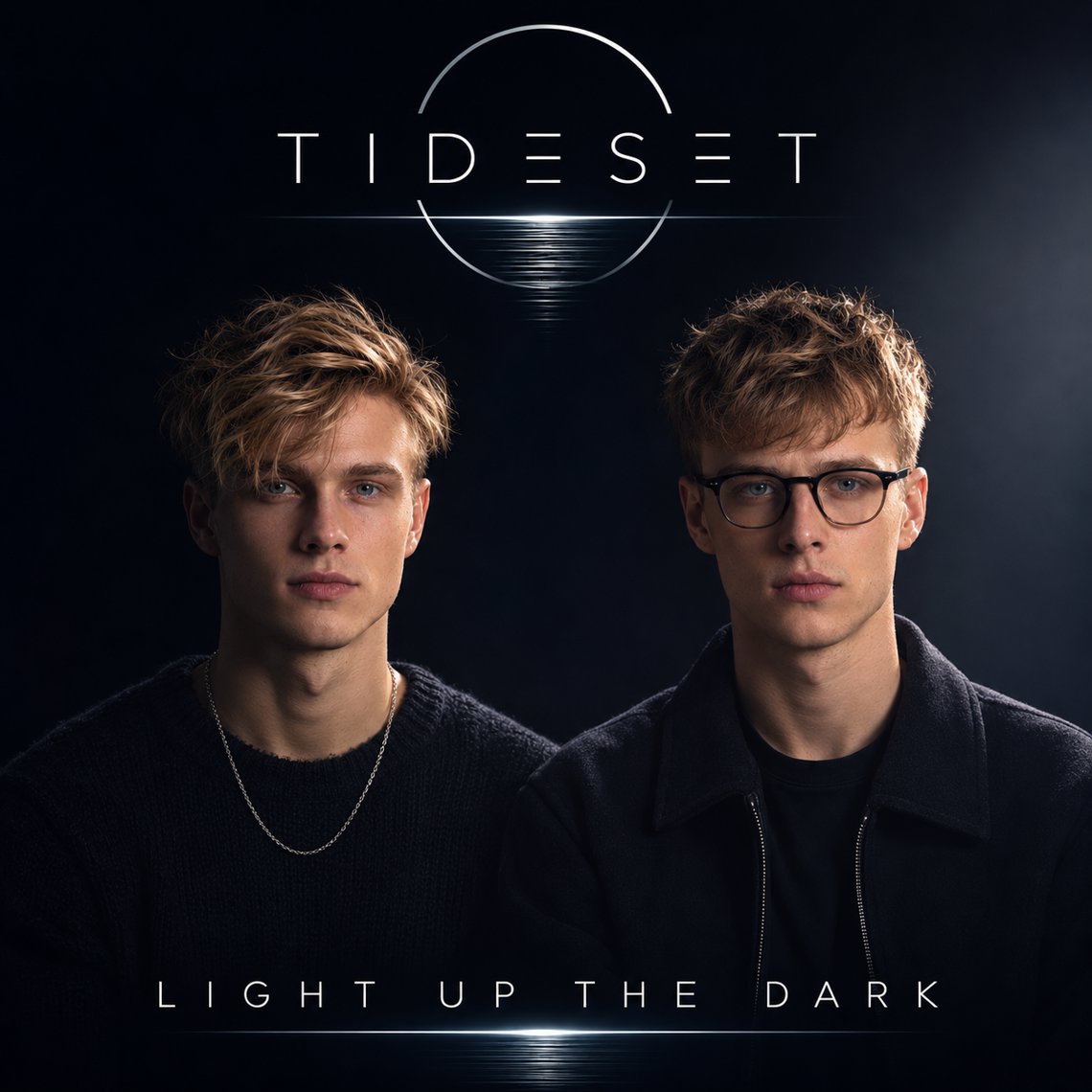
TIDESET – Light Up the Dark
A compelling collision of Nordic darkness and irresistible pop melodies
★★★★☆ (4/5)
With two EPs, six singles and an impressive four number-one hits already to their name, TIDESET arrive at their debut album with considerably more expectation surrounding them than most emerging electronic acts. Fortunately, Light Up the Dark is a confident, accomplished record that not only consolidates the duo's success but establishes them as artists capable of delivering something more substantial than a succession of chart-friendly dance singles.
Comprising Rasmus Kask and Karl-Erik Vaher, TIDESET occupy an increasingly interesting space between electronic dance music and contemporary pop. Their approach is refreshingly song-orientated, favouring memorable melodies, powerful vocal performances and carefully constructed arrangements over the repetitive synth hooks and predictable drops that dominate much of mainstream EDM. These are songs that would arguably remain compelling even if stripped of their electronic production — something that cannot be said of every act operating within the genre.
What distinguishes TIDESET, however, is their ability to make darkness sound remarkably infectious. There is a distinctly Nordic sensibility running throughout Light Up the Dark, with brooding harmonies, atmospheric electronic textures and an underlying melancholy that rarely compromises the immediacy of their melodies. The result is music that feels simultaneously euphoric and introspective, balancing emotional weight with considerable commercial appeal.
The opening title track establishes the album's identity immediately, combining cinematic grandeur with a commanding vocal performance. The restless energy of Cyclones follows, before Riding a Dream introduces a more expansive, uplifting quality without abandoning the record's atmospheric foundations.
Lead single Sparks is an obvious highlight and a particularly effective distillation of everything TIDESET do well. Its infectious melody, pulsating electronic production and soaring chorus make it an effortlessly accessible piece of dance-pop, yet there is enough sophistication in its arrangement to reward repeated listening. It feels like a natural continuation of their previous chart successes without simply replicating them.
Elsewhere, Breathe demonstrates the duo's understanding of restraint, allowing the vocals and harmonic progression to carry much of the emotional weight. Chasing Comets is suitably expansive and cinematic, while the wonderfully atmospheric Something in the Shadows leans further into the darker characteristics of their sound. The latter is particularly effective in demonstrating that TIDESET need not sacrifice their pop instincts when exploring more brooding musical territory.
One of the album's greatest strengths is the attention paid to what happens beneath the vocals. Kask and Vaher clearly understand the importance of musical development, layering electronic textures, rhythmic details and harmonic shifts in ways that give their arrangements genuine depth. There is a sense of movement within the production that extends beyond simply building towards the next chorus or instrumental drop. Even at their most commercially accessible, TIDESET rarely sound musically lazy.
Long-standing followers may, however, be slightly disappointed by the inclusion of In the Blue, Electricity and Out of Orbit, all of which have previously appeared as single B-sides. None feels undeserving of its place — indeed, their quality arguably highlights the strength of the duo's wider catalogue — but with three of the album's thirteen tracks already familiar to dedicated listeners, there is a legitimate question as to whether a debut album might have benefited from offering more entirely new material.
There are also moments when the consistency of TIDESET's production becomes something of a limitation. Their preference for atmospheric verses, expansive choruses and dramatic electronic builds occasionally makes the direction of a song a little too predictable. A greater willingness to disrupt their established formula could have elevated an already impressive collection into something truly exceptional.
Nevertheless, the closing stretch is particularly strong. Wolves brings a more imposing, urgent character to proceedings, while Red Moon captures the nocturnal melancholy that has become something of a TIDESET trademark. Closing track Bright Skies provides a satisfying sense of emotional resolution, its more hopeful atmosphere offering a fitting counterpoint to the darkness that permeates much of the album.
There has also been speculation that previous collaborator Jenni Hart may make an appearance somewhere within the wider Light Up the Dark project. Given the musical chemistry demonstrated in their earlier collaborations, it would certainly be a welcome development. Nevertheless, this album makes a convincing case for TIDESET's ability to command attention entirely on their own merits.
Ultimately, Light Up the Dark succeeds because Kask and Vaher recognise that electronic music need not choose between emotional substance and dancefloor appeal. Their greatest asset is not necessarily their production expertise, impressive though it is, but their understanding of what makes a genuinely memorable song.
It is a polished, atmospheric and frequently exhilarating debut, from a duo whose commercial success appears entirely justified. There remains room for greater experimentation, but TIDESET have already achieved something many electronic acts spend years pursuing: a recognisable musical identity.
Dark enough to intrigue, melodic enough to captivate and energetic enough to keep listeners coming back, Light Up the Dark is an impressive opening statement.
Standout tracks: Light Up the Dark, Sparks, Breathe, Something in the Shadows, Red Moon.